
PVD Gold Plating vs Traditional Gold Plating: What's the Difference?
PVD Gold Plating vs Traditional Gold Plating: What's the Difference?
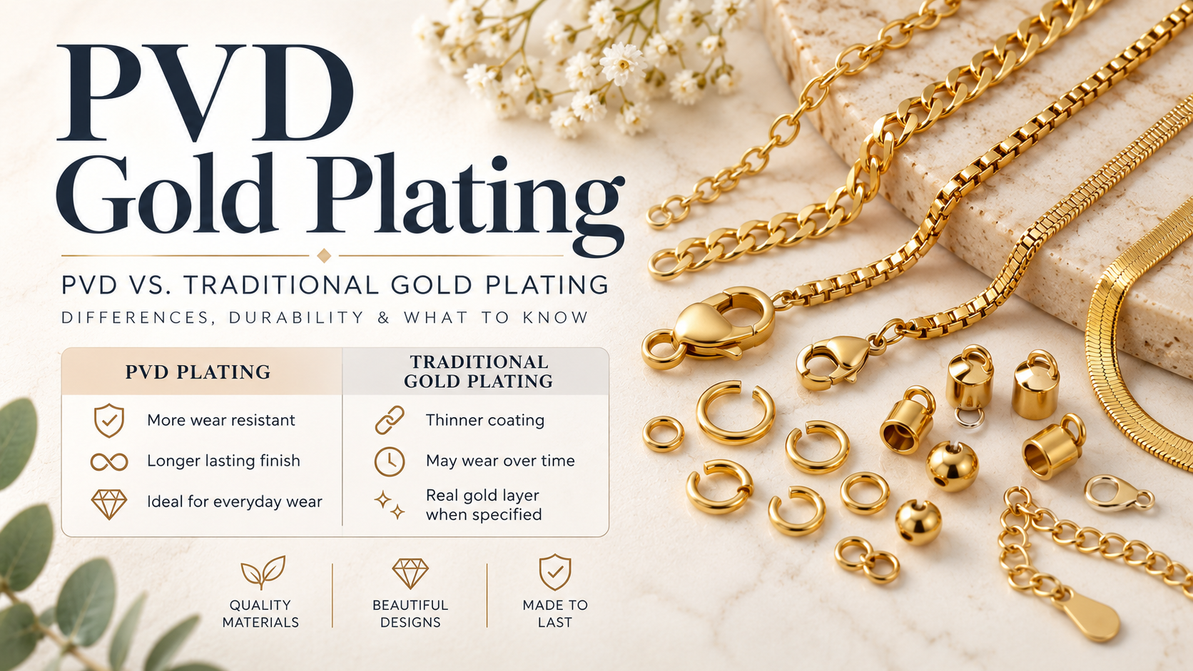
When shopping for gold-coloured jewelry findings, chains, or accessories, you may see terms such as gold plated, PVD plated, and stainless steel. They can look similar at first glance, but the coating methods and how they perform over time can be quite different.
For jewelry makers, understanding these differences can help you choose materials that look beautiful and stand up better to everyday use. Here's what to know about PVD plating, traditional electroplating, and caring for your finished jewelry.
What Is PVD Plating?
PVD stands for Physical Vapour Deposition. It is a process that applies a thin coating to a surface in a controlled vacuum environment. Material is converted into vapour and deposited onto the item, creating a closely bonded finish.
For gold-coloured stainless steel jewelry, PVD can create an attractive gold-tone surface with good wear resistance. The exact properties depend on the coating material, application process, and underlying metal.
Importantly, gold-coloured PVD does not automatically mean that the coating contains real gold. PVD describes the method used to apply a coating, not its precious-metal content.
What Is Traditional Gold Plating?
Traditional gold plating generally refers to electroplating, where an electrical current helps deposit a thin layer of gold onto a base material from a plating solution. The resulting appearance and durability depend on the base metal, surface preparation, plating thickness, and wear conditions.
Electroplating can create a beautiful finish and is used widely in jewelry. However, thin decorative coatings may gradually wear away, especially on pieces exposed to frequent rubbing or contact with hard surfaces.
PVD vs Traditional Gold Plating: Quick Comparison
| Feature | PVD Gold-Colour Coating | Traditional Gold Electroplating |
|---|---|---|
| Application | Vacuum deposition | Electrochemical deposition |
| Gold appearance | Available in gold tones | Gold finish from deposited gold |
| Wear resistance | Often strong with suitable hard coatings | Varies greatly with plating thickness and use |
| Real gold? | Not necessarily | Yes, when accurately described as gold electroplating |
| Lifespan | Can be long-lasting with proper care | Depends on coating thickness and conditions |
Note: Neither process guarantees a permanent finish. A high-quality, sufficiently thick electroplated layer may outlast a poorly applied PVD coating. Product quality matters as much as the technology itself.
Why Fine Gems Canada Chooses PVD-Plated Stainless Steel
Whether you're making necklaces, bracelets, earrings, or other accessories, the quality of the findings matters. PVD-plated stainless steel combines a sturdy base material with a coating method valued for its wear resistance.
Explore our stainless steel chains and finished stainless steel necklaces for your next design.
Does PVD-Plated Stainless Steel Tarnish or Fade?
Stainless steel is valued for its corrosion resistance, and a well-applied PVD finish can help maintain a consistent appearance during normal wear. However, no plated finish is completely immune to scratches, fading, or wear.
Frequent friction, abrasive cleaners, exposure to harsh chemicals, and contact with rough surfaces can shorten the life of any decorative coating. Areas that rub against clasps, pendants, or other metal components may show wear sooner than protected surfaces.
How to Care for PVD-Plated Jewelry
- Wipe pieces gently with a soft, clean cloth after wearing.
- Use mild soap and water when necessary, then dry thoroughly.
- Avoid abrasive polishing cloths, harsh cleaning chemicals, and prolonged chemical exposure.
- Remove jewelry before activities that cause heavy friction or impact.
- Store pieces separately to reduce scratching and tangling.
These simple habits can help preserve the appearance of both PVD-coated and traditionally plated jewelry.
Which Finish Is Best for Jewelry Making?
The best choice depends on the design, budget, intended wear, and materials you want to offer your customers. Traditional gold electroplating may be appropriate when a specified real-gold layer is important. PVD-coated stainless steel is an appealing choice when you want a practical, gold-coloured component with good potential for everyday durability.
For designers selling handmade jewelry, clear material descriptions are essential. Rather than using "solid gold" or "gold filled" for a gold-coloured stainless steel item, describe the base material and finish accurately, such as "PVD gold-colour plated stainless steel."
Frequently Asked Questions
Is PVD plating the same as gold plating?
Not exactly. PVD is a vacuum coating method, while traditional gold electroplating uses an electrical process to deposit gold. Both can produce a gold-coloured appearance, but they are not interchangeable terms.
Is PVD gold-coloured jewelry made with real gold?
Not necessarily. Some PVD coatings contain gold, while other gold-coloured coatings use different materials. Check the product specifications rather than assuming that the colour indicates precious-metal content.
Does PVD plating last forever?
No. Although some PVD coatings are highly wear-resistant, they can still scratch or wear with use. Their lifespan depends on coating quality, jewelry design, and care.
Is PVD-plated stainless steel waterproof?
Occasional contact with water is generally less concerning than exposure to abrasive or corrosive chemicals, but "waterproof" is not a guarantee of permanent colour. Dry jewelry after getting it wet, and avoid prolonged exposure to pools, salt water, and cleaning products.
Are all plated stainless steel products at Fine Gems Canada PVD plated?
Yes. All plated stainless steel products offered by Fine Gems Canada use PVD plating, selected to provide a durable, long-lasting finish. As with any plated jewelry, proper care will help maintain its appearance.
Final Thoughts
Understanding the difference between PVD plating and traditional gold plating makes it easier to choose suitable jewelry-making materials. While both finishes have their place, PVD-coated stainless steel is a popular option for designers who want an attractive gold tone and practical wear resistance.
At Fine Gems Canada, we're committed to offering jewelry-making supplies that balance quality, appearance, and value. Browse our stainless steel chains or explore finished chains for your next project.
Recent Posts
-
PVD Gold Plating vs Traditional Gold Plating: What's the Difference?
PVD Gold Plating vs Traditional Gold Plating: What's the Difference? When shopping for gold-coloure …15th Oct 2026 -
Bead Hole Size Guide: How to Choose the Right Cord or Wire
Bead Hole Size Guide: How to Choose the Right Cord or Wire An 8 mm gemstone bead tells you how wide …25th Sep 2026 -

12 Most Popular Gemstone Beads for Jewelry Making
12 Most Popular Gemstone Beads for Jewelry Making Gemstone beads are available in an extraordinary …11th Aug 2026